


Market’s Weigh Post-Election AI and Inflation Concerns
Key Takeaways
AI and semiconductor stocks drove the week's decline. The S&P 500 fell 2.7%, while the Nasdaq declined 3.4%, as investors grew increasingly concerned about AI infrastructure spending, elevated valuations, and potential restrictions on data center development.
The midterm elections brought a clear message on affordability. Voters continue to feel the effects of higher prices, and the cost of living appears to have played a significant role in the election outcome.
Inflation remains a problem for consumers, even as some measures look better. Wage growth has struggled to keep pace with rising prices, leaving households with less purchasing power and limited room to absorb additional expenses.
The post-election rally was short-lived. Lower oil prices and optimism around potential policy changes helped lift stocks Wednesday, but concerns surrounding AI infrastructure quickly took over.
The Fed faces a difficult balancing act. October employment data came in stronger than expected, increasing the likelihood of another rate hike in December, even as consumers continue to struggle with the cost of living.
Market Overview
Markets finished a back-and-forth week lower as selling in semiconductor and AI infrastructure stocks overwhelmed strength in several other areas.
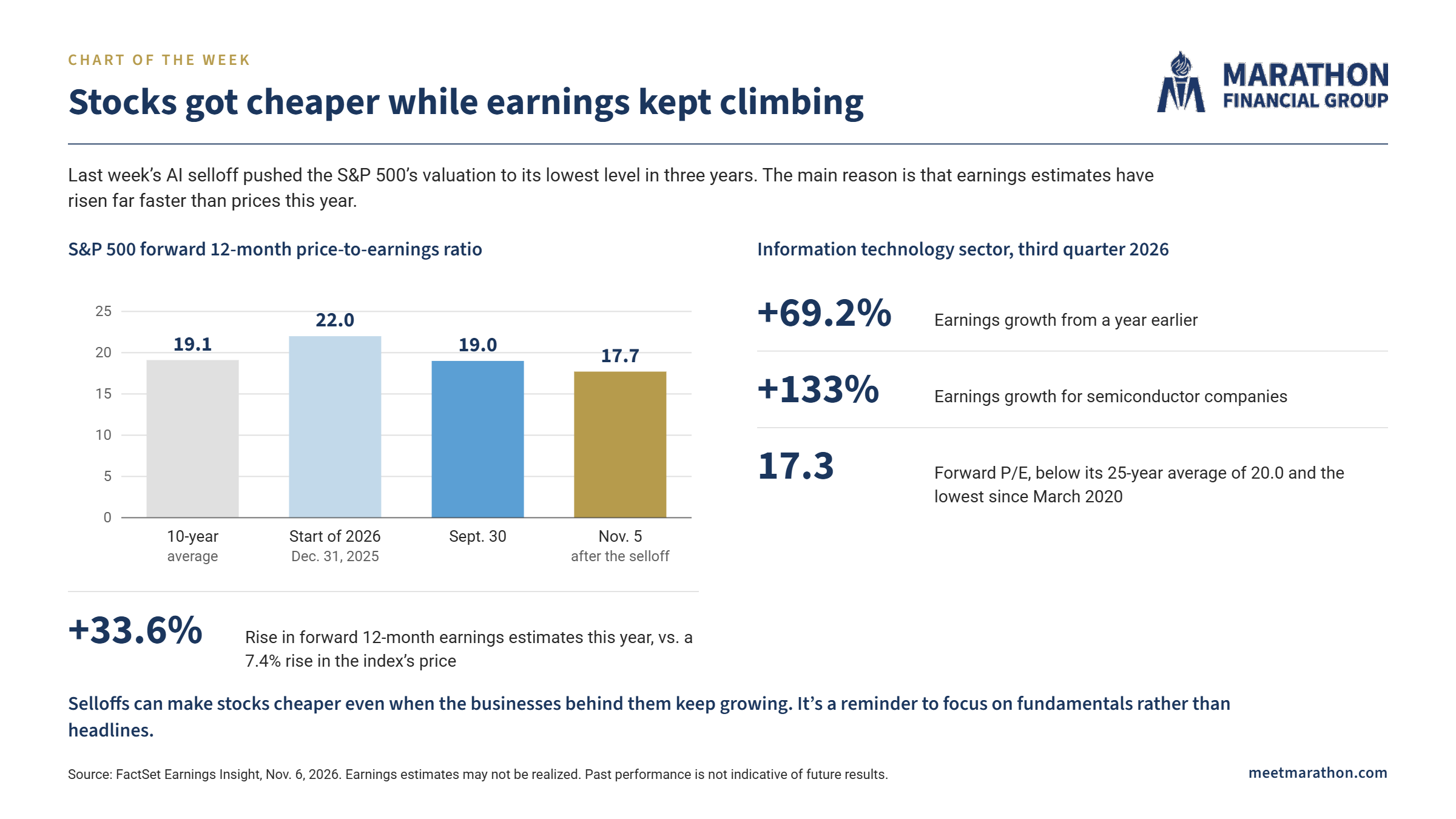
The week's trading was shaped by two major developments: the midterm elections and growing concerns surrounding the AI investment cycle. A broad rally Wednesday followed Democratic victories in both chambers of Congress and a sharp decline in oil prices, but the optimism was short-lived. Thursday's selloff was particularly severe, with the Nasdaq falling 5.5% and the S&P 500 dropping 4.4%. The semiconductor index plunged 12.3% that day and finished the week down 12.2%.1
Investors are increasingly questioning whether the enormous capital commitments tied to AI infrastructure can translate into earnings growth sufficient to justify elevated valuations.
Concerns about potential restrictions on data center development added to the pressure, extending the weakness beyond chipmakers to companies involved in power generation, data center construction, and related infrastructure.
There were pockets of strength. Consumer discretionary, communication services, and real estate stocks benefited from lower energy prices and expectations for potential policy changes following the election. Amazon was among the stronger mega-cap performers, gaining 7.8% for the week. Still, those gains were not enough to offset the technology-led decline.
The Cost of Living Takes Center Stage
The election results also reinforced a broader economic reality: affordability remains a major concern for American households. Voters expressed frustration with the cost of living, and that pressure is unlikely to disappear simply because political control has shifted.
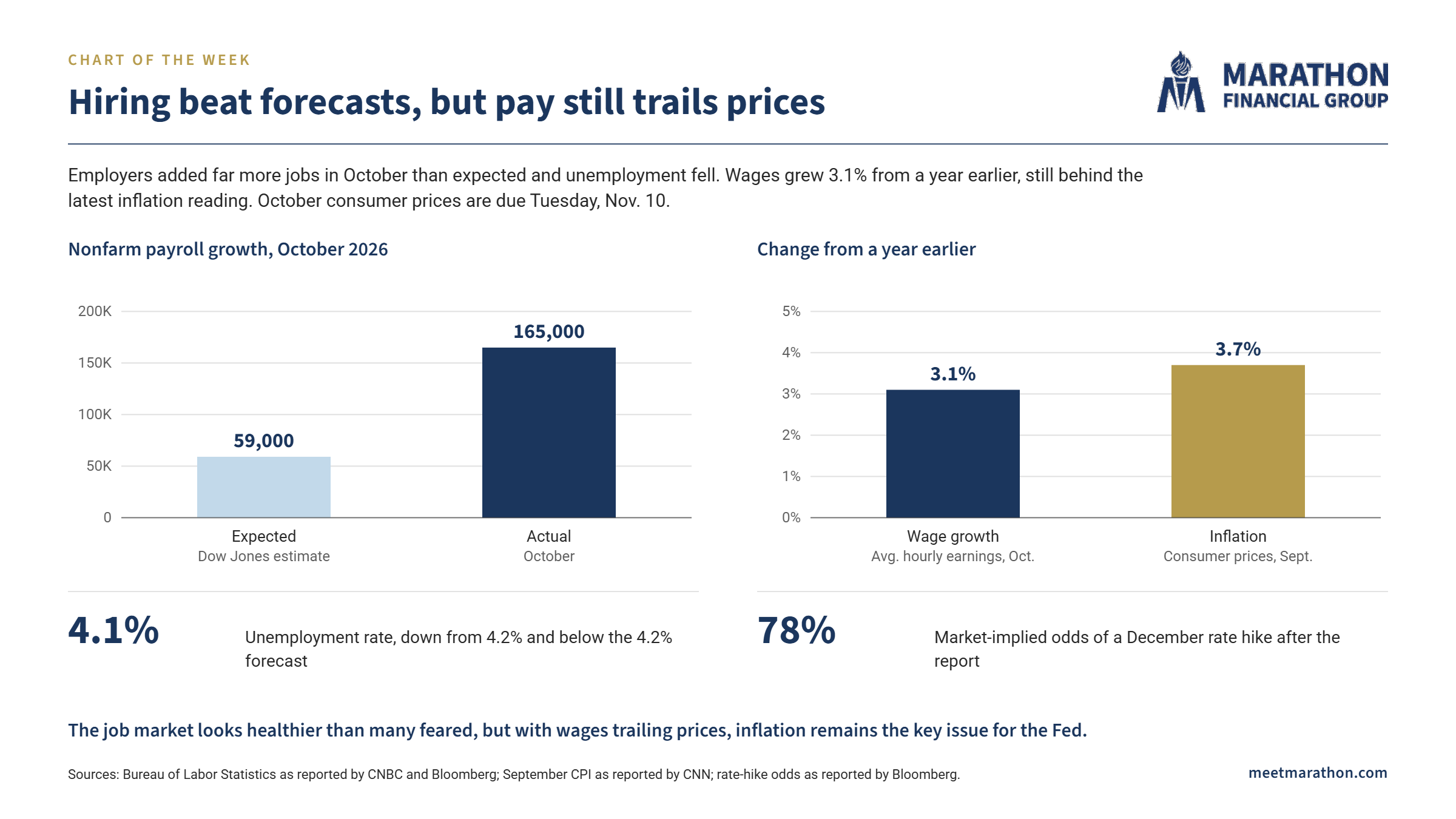
Although core inflation has moderated, households continue to feel the effects of several years of elevated prices. September headline CPI was up 3.7% year over year, while core CPI increased 2.6%. The Fed's preferred PCE measure showed inflation of 3.6%, or 3.1% excluding food and energy. Measures that exclude food, energy, and shelter suggest a much cooler inflation environment, but they leave out many of the expenses that matter most to households.2
Wages are another part of the equation. Average hourly earnings rose 3.1% over the past year, trailing both CPI and PCE inflation. In other words, many workers are still losing purchasing power despite continued employment and wage growth. Meanwhile, the personal savings rate has fallen to 3.8%, near its lowest level in 15 years outside the pandemic stimulus period.3
The political implications are significant, but the underlying issue is economic. Regardless of which party controls Washington, the cost of living remains a challenge for consumers, businesses, and policymakers.
Interest Rates, the Fed & Fixed Income
Friday's October employment report added another complication for the Federal Reserve. Payrolls increased by 165,000, well above expectations, while unemployment declined to 4.1% and average hourly earnings rose 0.4% for the month. The report suggests the labor market remains relatively resilient, but wage growth continues to lag inflation.4
The stronger employment data pushed the market-implied probability of a December rate hike to approximately 80%. Treasury yields were mixed for the week, with the 10-year yield finishing at 4.86%, down seven basis points. While falling yields provided some support to bonds, the possibility of additional Fed tightening remains an important consideration for investors.
Oil, Geopolitics & Corporate Earnings
Oil prices fell approximately 13% during the week, with West Texas Intermediate ending near $90 per barrel. The decline reflected growing optimism that the U.S. and Iran could pursue a diplomatic resolution rather than further military escalation. Lower energy prices could provide some relief to consumers and businesses, although the geopolitical situation remains uncertain.
Corporate earnings also produced a mixed picture. Several companies, including AMD and Palantir, reported solid results but faced selling pressure as investors questioned valuations and future growth expectations. Others, including AppLovin and Cloudflare, were rewarded for stronger results and guidance. The broader takeaway is that investors are becoming more selective, placing greater emphasis on earnings quality, cash flow, and the ability to translate substantial AI investment into sustainable returns.
Our Perspective
This week's volatility is another reminder of how concentrated market leadership has become and how quickly sentiment can change when expectations are challenged. AI remains a potentially transformative investment theme, but that does not mean every company associated with it will be a long-term winner or that current valuations are immune to correction.
At the same time, the broader economy continues to face competing forces: a relatively resilient labor market, persistent cost-of-living pressures, elevated interest rates, and uncertainty surrounding energy prices and government policy.
We believe this environment reinforces the importance of diversification, disciplined portfolio construction, and focusing on businesses with durable earnings, strong balance sheets, and reasonable valuations rather than chasing the market's most popular themes.
Market pullbacks also offer opportunities. As long-term investors, we will be looking to take advantage of areas of the market we view as oversold relative to their fundamentals.
Week Ahead
Investors will look for signs that the recent volatility in technology and AI-related stocks is beginning to stabilize, while continuing to assess whether the substantial investment in AI infrastructure can support current earnings expectations.
Economic data will also remain in focus, particularly updates on inflation, consumer spending, and the labor market, as markets weigh the possibility of another Federal Reserve rate hike in December.
Developments surrounding energy prices and the conflict with Iran could also influence inflation expectations and market sentiment. With valuations, interest rates, and the cost of living all shaping the outlook, markets may remain sensitive to both economic data and company-specific news.
As always, please reach out to us for any questions and thank you for your trust.
Michael Neill, CFA
This communication is for informational purposes only and does not constitute an offer to sell or a solicitation of an offer to buy any securities. Any references to specific securities are not recommendations and should not be relied upon as investment advice.
1,2,3,4 Economic and Index Data Sources: Marathon Financial Group, TradingEconomics & Bloomberg, LP.