


Hello Marathoners-
I hope everyone had a nice and relaxing Thanksgiving.
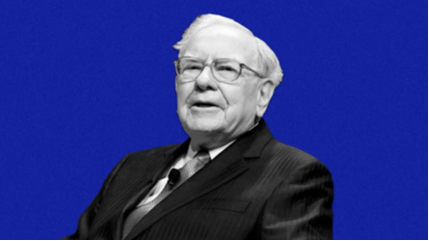
After reading Warren Buffett’s Thanksgiving letter to shareholders, I decided to dedicate this installment to him and the wisdom of his reflections and advice over the years, which combine a disciplined, long-term investment philosophy with practical life advice focused on integrity, patience, and continuous learning.
Buffett has officially signaled the end of an era, after an epic 60 years of leadership as Berkshire Hathaway CEO. For more than half a century, Buffett transformed a struggling textile mill into one of the most extraordinary compounding machines in financial history. Under his stewardship, Berkshire Hathaway delivered returns so astonishing that they’ve become almost mythological—turning modest investments into fortunes and redefining what disciplined, long-term capital allocation can achieve. Buffett didn’t just outperform the market; he reshaped how generations of investors understood value, risk, and rational decision-making.
What makes Buffett singular goes beyond the numbers. He brought to capitalism a rare blend of intellectual humility, moral clarity, and folksy simplicity. His annual letters—equal parts wisdom, wit, and accounting seminar—became required reading for anyone seeking to understand business at its most elementary level. He taught that temperament matters more than brilliance, that patience beats prediction, and that honesty is a competitive advantage. In an age obsessed with speed and short-termism, Buffett embodied the power of slow, steady, compounding thought.
Buffett’s legacy also extends to philanthropy, where he has redefined what personal responsibility at scale looks like. His decision to give away more than 99% of his wealth—and his role in launching the Giving Pledge—reflects a worldview guided not by accumulation but by stewardship. The ‘Oracle of Omaha’ showed that extraordinary financial success and extraordinary generosity are not contradictions but complements.
As the curtain closes on his formal career, Warren Buffett leaves behind far more than a thriving conglomerate. He leaves a philosophy—rational, humane, disciplined—that will continue to shape investors, leaders, and thinkers for decades to come. Few individuals have ever combined such success, consistency, and integrity. Buffett is not merely retiring; he is ascending fully into legend.
I have followed and been inspired by Buffett since I was a teenager, and not unlike so many millions of other investors, professional and ‘retail’ alike, no other public figure has influenced my investing principles more than this man.
Long after I’ve forgotten the details of the See’s Candies deal, I will remember the virtues he stood for, often conveyed through memorable quotes such as:
“The most important quality for an investor is temperament, not intellect. You need a temperament that neither derives great pleasure from being with the crowd or against the crowd.”
“Success in investing doesn’t correlate with IQ…what you need is the temperament to control the urges that get other people into trouble in investing.”
“Opportunities come infrequently. When it rains gold, put out the bucket, not the thimble.”
“Widespread fear is your friend as an investor because it serves up bargain purchases.”
“Remember that the stock market is manic depressive.”
“If you aren’t willing to own a stock for ten years, don’t even think about owning it for ten minutes.”
“Keep things simple and don’t swing for the fences. When promised quick profits, respond with a quick “no”.
“We always live in an uncertain world. What is certain is that the United States will go forward over time.”
“American business- and consequently a basket of stocks—is virtually certain to be worth far more in the years ahead.”
To say “When he talks, people listen” is an understatement.
Here are 10 things we can all learn from Buffett, less about investing, but more simply in terms of practical life advice:
- Be kind. “Kindness is costless but also priceless,” Buffett writes in his recent letter. “Whether you’re religious or not, it’s hard to beat The Golden Rule as a guide to behavior.” Buffett has long been known for his decency. I’ve watched him at shareholder meetings handling dissenters, however rambling, with the utmost respect. “Praise by name. Criticize by category,” he says. It’s one of the lessons he absorbed early in life from Dale Carnegie’s How to Win Friends and Influence People. Kindness has also been good for business. “We don’t do unfriendly deals,” Buffett once wrote to a prospective acquiree. “If you want to pursue a merger, call me.” Many business owners have called over the years. “He treated our family with respect and let us keep doing things our way. That meant a lot,” said the Blumkins, whose matriarch Rose sold Nebraska Furniture Mart to Berkshire Hathaway in 1983. Lavishing praise on employees and associates also breeds loyalty. “Write your own obituary and reverse-engineer it,” are words to live by.
- Have integrity. “It takes 20 years to build a reputation and five minutes to ruin it,” Buffett once said. To many, Buffett stands for midwestern values of honesty, plainspokenness, and fairness. “Warren is the fairest person I’ve ever dealt with,” said Tom Murphy, who ran Capital Cities Communications, which partnered with Berkshire Hathaway to buy ABC in 1985. “He never tried to take advantage of us. He always wanted both sides to feel good about the deal.” Though he could be a hard-nosed negotiator, Buffett built a reputation for rectitude that served him and Berkshire shareholders well. As an example, the US Department of the Treasury entrusted him to take over scandal-ridden Salomon Brothers in 1991. He testified to Congress that his marching orders would be: “Lose money for the firm and I will be understanding; lose a shred of reputation for the firm, and I will be ruthless.” Another quote that should hang from every cubicle: “Ask yourself if you would be willing to have your actions appear on the pages of a newspaper the next day.”
- Practice patience. When asked why few copy his investment approach, Buffett answered, “Because no one wants to get rich slow.” In a world of ever-shrinking attention spans, a 24-hour news cycle, and everything one click away, it’s easy to lose sight of the all-important long game. “Life is like a snowball,” Buffett once said. “The important thing is finding wet snow and a really long hill.” It’s a beautiful metaphor for the principle of compounding but applies more broadly. In her biography The Snowball, Alice Schroeder quotes Buffett saying, “I don’t just mean compounding money either. It’s in terms of understanding the world and what kinds of friends you accumulate.” In investing, Buffett avoided taking action for action’s sake, biding his time until opportunity struck. During other periods, he made a virtue out of inaction. “When in doubt keep holding,” he has said. “I’ve made most of my money sitting on my ass.” Investors are advised to start young, avoid debt, and eschew excessive trading. According to Buffett, “The stock market is a device for transferring money from the impatient to the patient.”
- Use caution. “Margin of safety” was a concept Buffett learned from his professor, mentor, and boss Benjamin Graham, considered the father of value investing. Though Buffett’s thinking later evolved—influenced by Phil Fisher and Charlie Munger, he came to believe that “It’s far better to buy a wonderful company at a fair price than a fair company at a wonderful price”—his thriftiness remained. A “Fort Knox balance sheet” enabled Buffett to take advantage of undervalued opportunities and act as a “lender of last resort.” But Berkshire’s current stash of $358 billion also assures it won’t be “swimming naked.” Buffett avoided leverage and famously called derivatives “financial weapons of mass destruction.” His post-financial crisis reflection, “You absolutely never want to be in a position where tomorrow morning you have to depend on the kindness of strangers,” applies generally. Preparedness is critical. “Predicting rain doesn’t count,” Buffett said. “Building arks does.”
- Be positive. “Our stock price will move capriciously,” Buffet writes in his recent shareholder letter, “occasionally falling 50% or so as has happened three times in 60 years under present management. Don’t despair; America will come back and so will Berkshire shares.” Underpinning his investment success is Buffett’s enduring belief in capitalism, in human ingenuity, and in America. To be fair, Buffett’s experience living through decades of economic growth and asset price appreciation colored his outlook. Ben Graham’s caution, by contrast, was bred from the economic depressions and financial panics he witnessed. Still, optimism has generally rewarded investors. And Buffett’s positive demeanor, a refusal to dwell, and his habit of “tap dancing to work” have likely contributed to his longevity. Or is it his diet of See’s Candies, Cherry Coke, and Omaha steak?
- Think independently. “Be fearful when others are greedy; be greedy when others are fearful” exemplifies Buffett’s contrarianism. In 1999, at the peak of the technology, media, and telecom bubble, he warned that stock prices were too high. In October 2008, as a global financial crisis was sending the market plummeting, Buffett wrote a New York Times op-ed entitled “Buy American. I am.” Neither 1999 nor 2008 was the first time Buffett went against the grain. He famously shut down an investment partnership after the boom of the late 1960s left him “not attuned to this market environment.” Then, during the bear market of the 1970s, he used the failing textile business Berkshire Hathaway to load up on cheap assets like GEICO and the Washington Post. A voracious reader who Charlie Munger described as a “learning machine,” Buffett told biographer Alice Schroeder, “You are neither right nor wrong because people agree with you. You’re right because your facts and reasoning are right.”
- Exhibit humility. “Circle of competence” is a foundational Buffett concept. Buffett has always been one to acknowledge his limitations and play to his strengths. For decades, it kept him out of technology investments, though a purchase of Apple AAPL stock on the grounds that it’s really a consumer business earned Berkshire handsome profits. “Risk comes from not knowing what you are doing,” he explained. Buffett has always acknowledged investment mistakes, including a company he nicknamed “Cleveland’s Worst Mill,” US Air, the original Berkshire Hathaway, and many more “sins of omission.” He has also admitted shortcomings as a husband and father. “Humility disarms,” wrote biographer Alice Schroeder of Buffett in The Snowball. It’s a lesson he learned from Dale Carnegie, who counseled, “If you are wrong, admit it quickly and emphatically.” In his recent shareholder letter, Buffett writes: “Don’t beat yourself up over past mistakes. Learn at least a little from them and move on.”
- Be content. “Envy is the only one of the 7 deadly sins that it’s no fun to commit,” Buffett has said. Comparing yourself to others is a recipe for dissatisfaction. Especially in this age of social media, images of happiness and success are ubiquitous. It’s easy to feel inadequate in comparison to ideals, which are often illusions. Though he spent his life accumulating great wealth, Buffett has stressed that happiness doesn’t come from money, fame, and power. “The purpose of life is to be loved by as many people as possible among those you want to have love you,” he told students. As cliché as it sounds, Buffett taught that the best things in life are free.
- Value continuity. Buffett has put people in place to ensure Berkshire continues to thrive without him. The new CEO, Greg Abel, is described by Buffett as “a great manager, a tireless worker, and an honest communicator.” Beyond Abel, insurance guru Ajit Jain remains a key figure, as do Todd Combs and Ted Weschler. In his recent letter, Buffett announces his intentions to retain a significant ownership stake “until Berkshire shareholders develop the comfort with Greg that Charlie and I long enjoyed.” On the philanthropic side, he has given to the Gates Foundation and announced that he will step up donations to the philanthropies of his three children. “Ruling from the grave does not have a great record,” Buffett acknowledges. “I have never had the urge to do so.”
- Practice gratitude. “I was born in 1930, healthy, reasonably intelligent, white, male, and in America. Wow! Thank you, Lady Luck,” Buffett writes in his recent letter. It’s what he has called “winning the Ovarian lottery.” Buffett’s Thanksgiving letter is a testament to gratitude—for surviving childhood illness, being raised well, specifically in his beloved Omaha, and partnering with the great Munger, among many other friends and colleagues. It’s a reminder to count our blessings and acknowledge our good fortune. As Buffett says: “Someone is sitting in the shade today of a tree planted a long time ago.”
With the impending retirement of Buffett, his successor and the otherwise most recognized and respected CEO in American business may very well be Jamie Dimon of JP Morgan Chase. Like Buffett, when he talks, people listen—and deservedly so.
Dimon was all but universally quoted in literally dozens of media outlets recently when he said: “There continues to be a heightened degree of uncertainty stemming from complex geopolitical conditions, tariffs and trade uncertainty, elevated asset prices and the risk of sticky inflation.”
Nowhere did I see any report of what he said next. (That doesn’t mean it wasn’t printed anywhere; it just means that if it was, I didn’t see it. And believe me: I looked.) As it generally does, financial journalism tended to highlight the negative and even scary parts of a longer, more balanced and more proactive statement.
In fact, Dimon’s statement went on to report on the many steps his company is taking to shore up its capital against the threats he listed. He specifically mentioned significantly increased reserves for possible loan losses. And he generally painted a picture of an institution forewarned, forearmed and prepared for a wide range of rising challenges.
It would only be human for any investor to read that relatively brief but extremely well reported part of Mr. Dimon’s statement and think, “These are huge systemic problems. Their solutions are nowhere in sight. Thus, they represent a significant threat to the stock market. Perhaps we should convert our investments to cash until things settle down a bit.”
I would draw your attention, as gently as possible, to the fact that as serious investors working a soundly based long-term plan, we are not, in fact, investing in the economy at all. We’re not even investing in ‘the stock market’ as such. Rather, we are investors in businesses. This is a critical distinction—perhaps the critical distinction.
Substantial profit-seeking companies such as those we may own for the long-term are, by and large, managed by executive teams and overseen by boards of directors committed to preserving the shareholders’ capital and acting opportunistically in crisis. Just as Dimon and his team are preparing for significant possible adversity, so we may assume we are the managements of the other notably successful companies in which we’re invested.
Granted, nothing the managements do can ever immunize their stocks from significant declines when a real crisis hits. Indeed, the S&P 500 Index has temporarily declined since 1950 by an average of nearly a third on an average of every five years—battered by genuine crises that have taxed the financial and human resources of even the finest companies.
Just in the first 25 years of this century, the S&P 500 halved twice in a ten-year period (2000-02 and 2007-09) in the dot-com implosion and the Global Financial Crisis, respectively. It went down by a third in one month when COVID struck, and by 25% over ten months when inflation roared to nine percent and the Fed raised interest rates further and faster than ever in its history. And those were just the big ones: I won’t bore you with the three (yes, three) more occasions when the market—in wide-spread panic—went down plus or minus 20%. (Hint: the third of these was the tariff typhoon of earlier this year.)
Yet $100,000 invested in the S&P 500 just before the dot-com bubble popped and left to compound (taxes paid from another source), had grown to well over $700,000 at the end of this September.
Neither that statistic nor anything else proves anything whatsoever about the future. But it suggests to me that the great companies have in the long run consistently triumphed over macroeconomic crises and market crashes of every description.
And it’s the companies that we’re investing in.
For those of you looking to get an early start on planning for 2026 (and/or 2025 tax prep season), I’ll wrap things up with some useful PDF guides (some of which were already shared several times throughout 2025, but will provide again for good measure!):
Taxation Guide to Withdrawals & Income Sources
What Issues Should I Consider Before The End of The Year?
What Issues Should I Consider At The Start of The Year?
I sincerely thank you for your trust and confidence. Please don’t hesitate to reach out if you have any questions on this content, or anything else. We are here to serve!
-Charlie